Why you wake wired, not tired
The normal predawn cortisol rise can meet reduced GABA and progesterone buffering, creating alertness at precisely the wrong hour.
You are not broken. You are unbuffered.
Cortisol climbs between 2 and 4 a.m. in every human body. In perimenopause, declining progesterone can strip away the brain's natural sedative buffer — so a rise that used to pass unnoticed now arrives as full alertness.
This 22-minute clinical framework helps you reset tonight, so you can fall back asleep before the spiral takes hold.
Instant PDF download · Mobile & print ready
Chapter one · preview
The first minute and a half decides whether a brief waking becomes a two-hour cortisol loop.
The normal predawn cortisol rise can meet reduced GABA and progesterone buffering, creating alertness at precisely the wrong hour.
Checking the time triggers threat appraisal, clock maths, and an avoidable second cortisol signal.
A glimpse, not the full protocol
The catastrophizing brake
Drop heart rate in one round
Activate the dive response
The cognitive distractor formula
The guide gives you exact execution, the biological rationale, and what to do if you reach the 20-minute mark.
The complete field guide
From the moment your eyes open to the conversation you take to your GP.
The exact four moves in the first 90 seconds.
Engineer the six hours before bed—because 3 a.m. is seeded at 4 p.m.
Ranked £0–£150 fixes to remove hidden sleep disruptors.
A self-guided, seven-night sleep restriction rebuild.
What moves the needle, what drains your wallet, and a script for your GP.
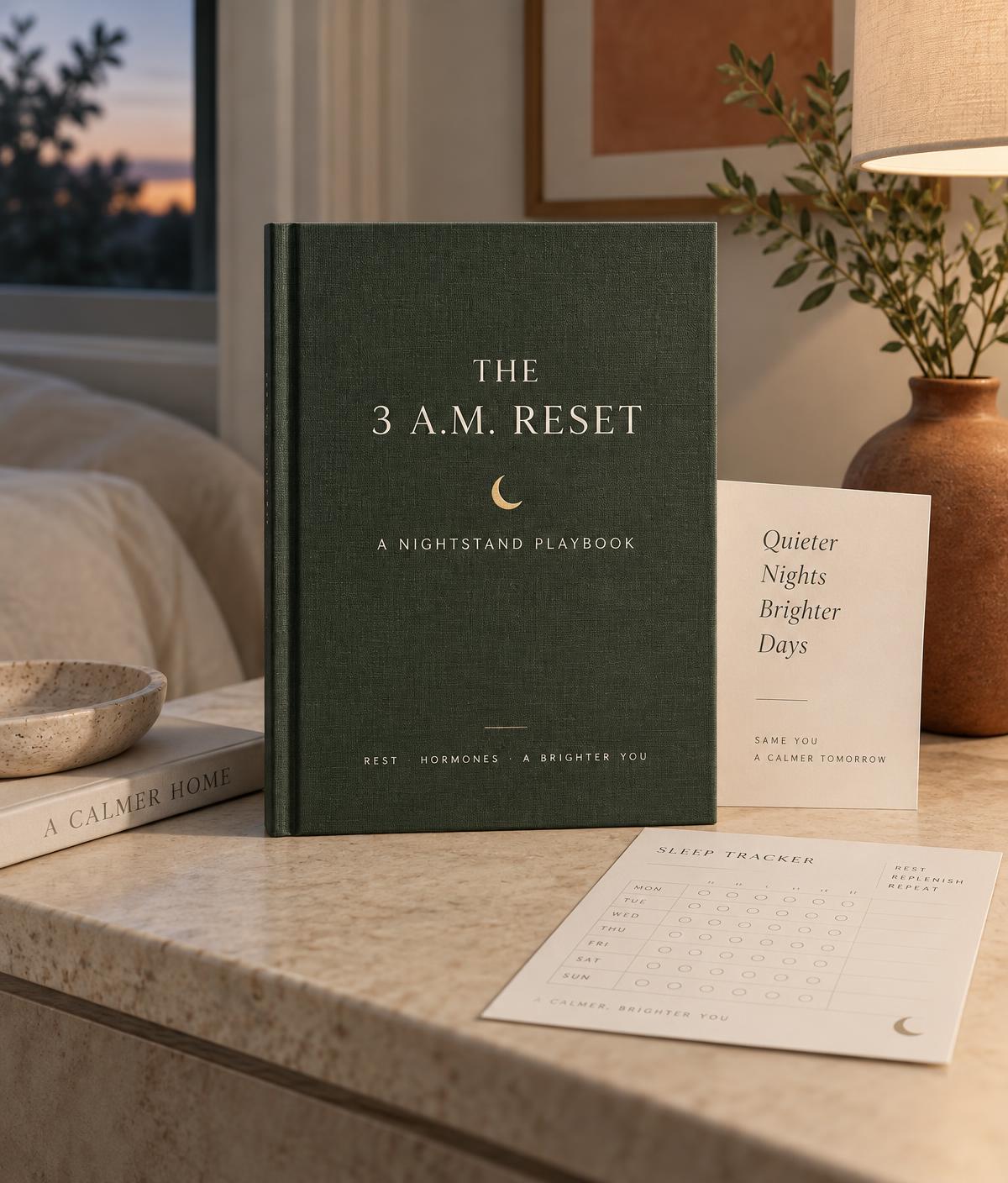
One sequenced page to print and place beside your bed.
Interactive preview
Sort signal from shelf noise. Open each tier for a preview of how the guide ranks interventions.
Unlock full dosages, timing protocols, contraindication notes, and the GP consultation script inside Chapter 5.
Designed to be used, not just read
A cut-out, 90-second emergency reminder designed to be legible in dim light.
Two numbers. Ten seconds each morning. Enough signal to see your pattern.
A word-for-word framework for asking for menopause-informed care.
Reader results
“Placeholder quote about getting back to sleep without lying awake for two hours.”
“Placeholder quote about finally having words for the GP appointment.”
“Placeholder quote about the nightstand card being the thing that actually stuck.”
Who wrote this
Melissa K built The 3 A.M. Reset after her own perimenopause nights stopped cooperating. She translated the clinical sleep and menopause literature into a nightstand tool she could actually use at 3 a.m. — and now shares it with women who need the same thing.
Every recommendation in the guide is referenced to current clinical sleep and menopause literature, reviewed for the 2026 edition.
Immediate digital access
Run the protocol for seven nights. If your sleep hasn't moved, email us within 30 days for a full refund — and keep the files. Everything inside is sourced from current clinical sleep and menopause research, reviewed for the 2026 edition.
Secure payment · Instant access · No subscription
Not ready? Read chapter one free
Before you download